
Trauma and the brain…
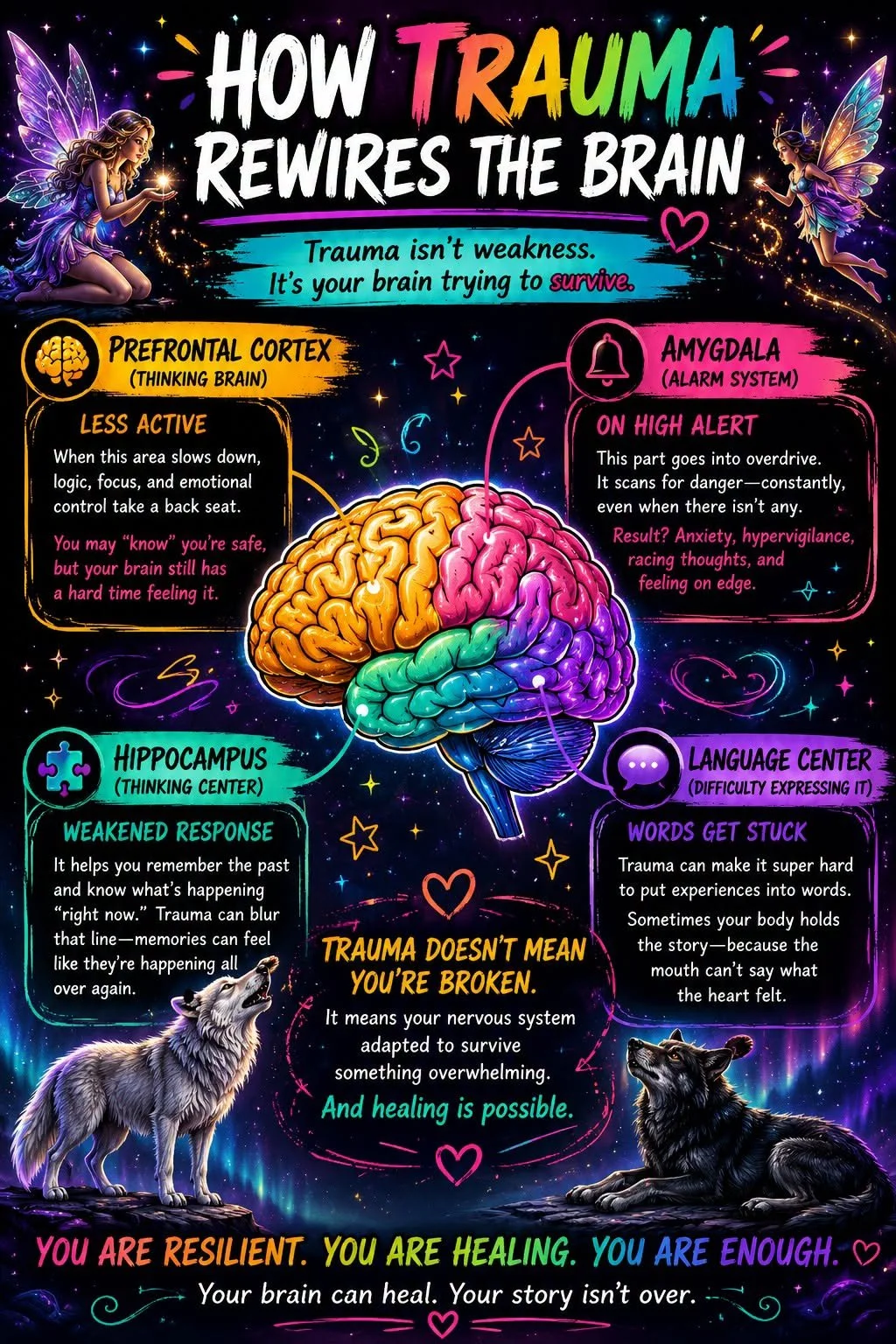
TRAUMA CAN CHANGE THE WAY THE BRAIN RESPONDS—BUT THAT DOESN’T MEAN THE STORY ENDS THERE.
Trauma isn’t simply “in your head,” and it isn’t a sign of weakness. When we experience something overwhelming, the brain and nervous system can adapt in ways designed to help us survive.
Those adaptations may affect areas and networks involved in:
THREAT DETECTION — The brain may become more sensitive to potential danger, contributing to hypervigilance or feeling constantly “on guard.”
THINKING & FOCUS — When the threat system is highly activated, clear thinking, concentration, decision-making, and emotional regulation can become more difficult.
MEMORY — Trauma can affect how memories are processed and recalled. Sometimes something happening in the present can trigger a powerful response connected to the past.
PUTTING EXPERIENCES INTO WORDS — During intense stress or trauma reminders, some people find it difficult to explain what they are experiencing. Sometimes the reaction comes before the words.
And here is the part I really want you to remember:
THE BRAIN CAN CONTINUE TO CHANGE.
Through neuroplasticity, our brains remain capable of learning and adapting throughout life. Healing doesn’t necessarily mean forgetting what happened. It can mean gradually developing new responses, greater awareness, stronger coping skills, and a greater sense of safety in the present.
Practices such as mindful movement, yoga, breathing, grounding, supportive relationships, and appropriate trauma-informed professional care can all be pieces of that healing journey.
You are more than what happened to you. Your past may help explain some of your patterns—but it does not have to determine every chapter that comes next.
Healing can take time.
Healing isn’t always linear.
And asking for support is part of taking care of yourself.
Your story is still being written.
LET’S TALK: What helps you feel grounded, connected, or more present when life feels overwhelming?
This post is for education and general wellness and is not a substitute for medical or mental health care.