
Come as you are…
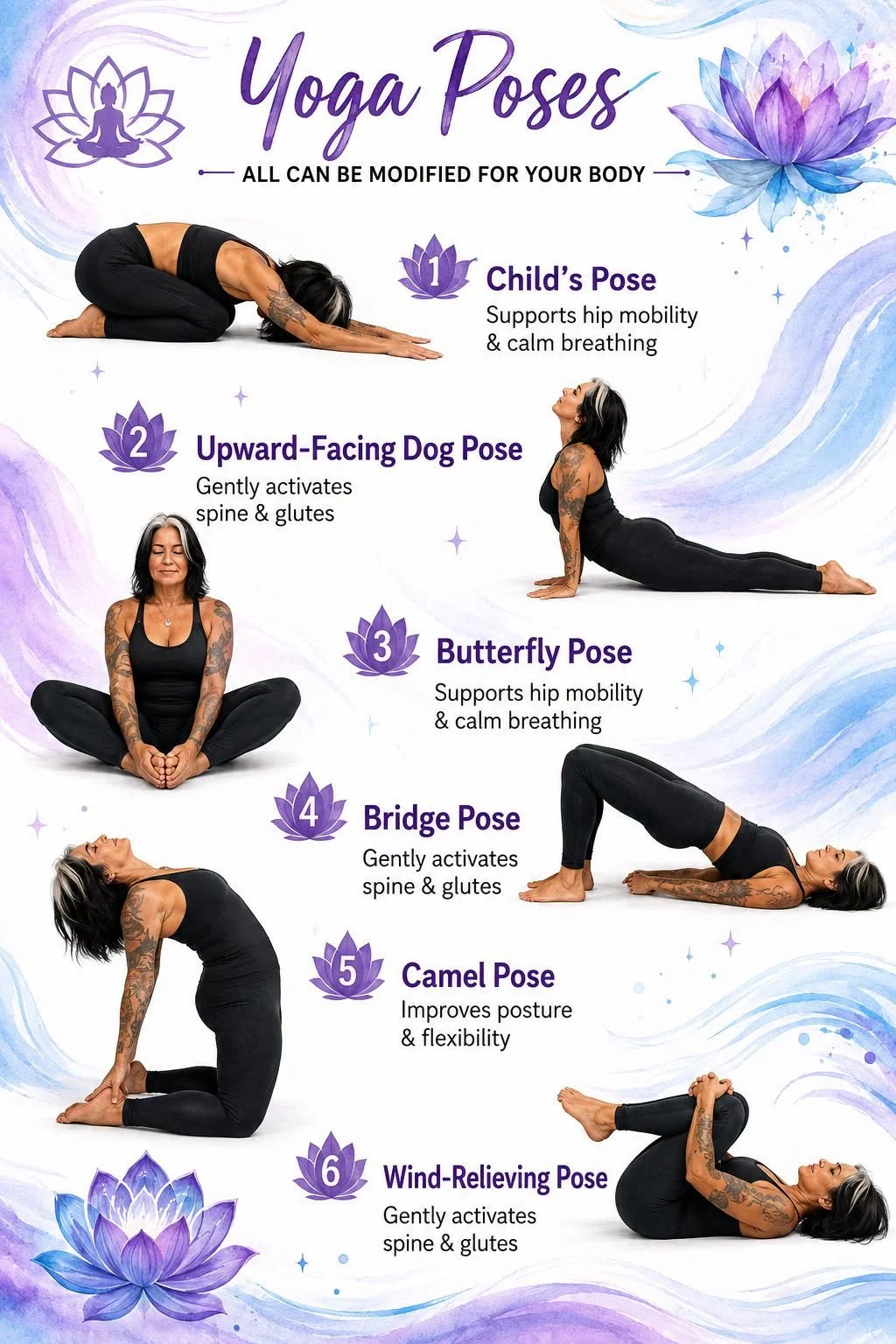
All poses can be modified for your body. Move slowly, stay within a comfortable range, and stop if you feel sharp pain, dizziness, numbness, or unusual discomfort.
1. Child’s Pose
A gentle resting pose that can help lengthen the back body, relax the hips, soften tension through the spine, and encourage slower, more mindful breathing. It can also be a helpful reset between more active poses.
Use caution or modify if you have:
Knee pain or injury, ankle discomfort, significant hip limitations, pregnancy, or difficulty breathing when folded forward. A bolster, pillow, or blocks can be used for support.
2. Upward-Facing Dog Pose
A strengthening backbend that opens the chest and front body while engaging the arms, shoulders, spine, and glutes. It may help improve posture, spinal mobility, and upper-body strength.
Use caution or modify if you have:
Wrist, shoulder, or low-back pain, recent abdominal surgery, pregnancy, or conditions aggravated by deep spinal extension. Cobra Pose or a smaller backbend may be a better option.
3. Butterfly Pose
A seated hip-opening pose that gently stretches the inner thighs, groin, and hips while encouraging an upright, relaxed posture. It can also be paired with slow breathing for a calming effect.
Use caution or modify if you have:
Hip, groin, knee, or sacroiliac discomfort. Avoid forcing the knees toward the floor. Support the thighs with blocks, cushions, or folded blankets if needed.
4. Bridge Pose
A gentle backbend and strengthening pose that activates the glutes, hamstrings, legs, and back body while opening the chest and front of the hips. It may also support spinal mobility and posture.
Use caution or modify if you have:
Neck, shoulder, back, or knee injuries, uncontrolled high blood pressure, or discomfort when lying on your back. Keep the head and neck still while in the pose and avoid turning the head.
5. Camel Pose
A deeper kneeling backbend that stretches the chest, shoulders, abdomen, hip flexors, and front body while strengthening the back. It can help improve posture and spinal extension when practiced with control.
Use caution or modify if you have:
Low-back, neck, knee, or shoulder problems, dizziness, migraines triggered by backbending, or blood-pressure concerns. Keep the hands on the lower back and remain more upright for a gentler variation.
6. Wind-Relieving Pose
A gentle floor pose that brings the knees toward the torso, helping stretch the low back and hips while softly compressing the abdomen. Many people find it relaxing and grounding.
Use caution or modify if you have:
Recent abdominal surgery, abdominal hernia, pregnancy, hip or knee injuries, or conditions where abdominal compression is uncomfortable or restricted. Bring in one leg at a time or keep the knees farther from the chest if needed.
Important: These are general yoga precautions, not medical advice. Individual needs vary, so anyone with an injury, recent surgery, pregnancy, osteoporosis, cardiovascular concerns, or another medical condition should check with an appropriate healthcare professional before beginning or modifying a yoga practice.
Please remember: Camel Pose is not a posture to jump into without preparation. Your body should be properly warmed up first.
Camel Pose is a deep backbend that requires openness through the front body, shoulders, chest, hip flexors, and spine. Take time to prepare with gentle movement and appropriate warm-up poses before moving into Camel.
Never force the backbend. Move slowly, breathe, listen to your body, and choose a modification when needed. Yoga is not about how deep you can go—it’s about practicing with awareness.